
Gutter System Design in Raeford, NC: Where Ice Guards Fit on Metal Roofs
Gutters manage water, while roof-mounted retention addresses sliding snow. Learn which metal roof details matter when planning both systems in Raeford.
Start With Drainage and Retention as Separate Jobs
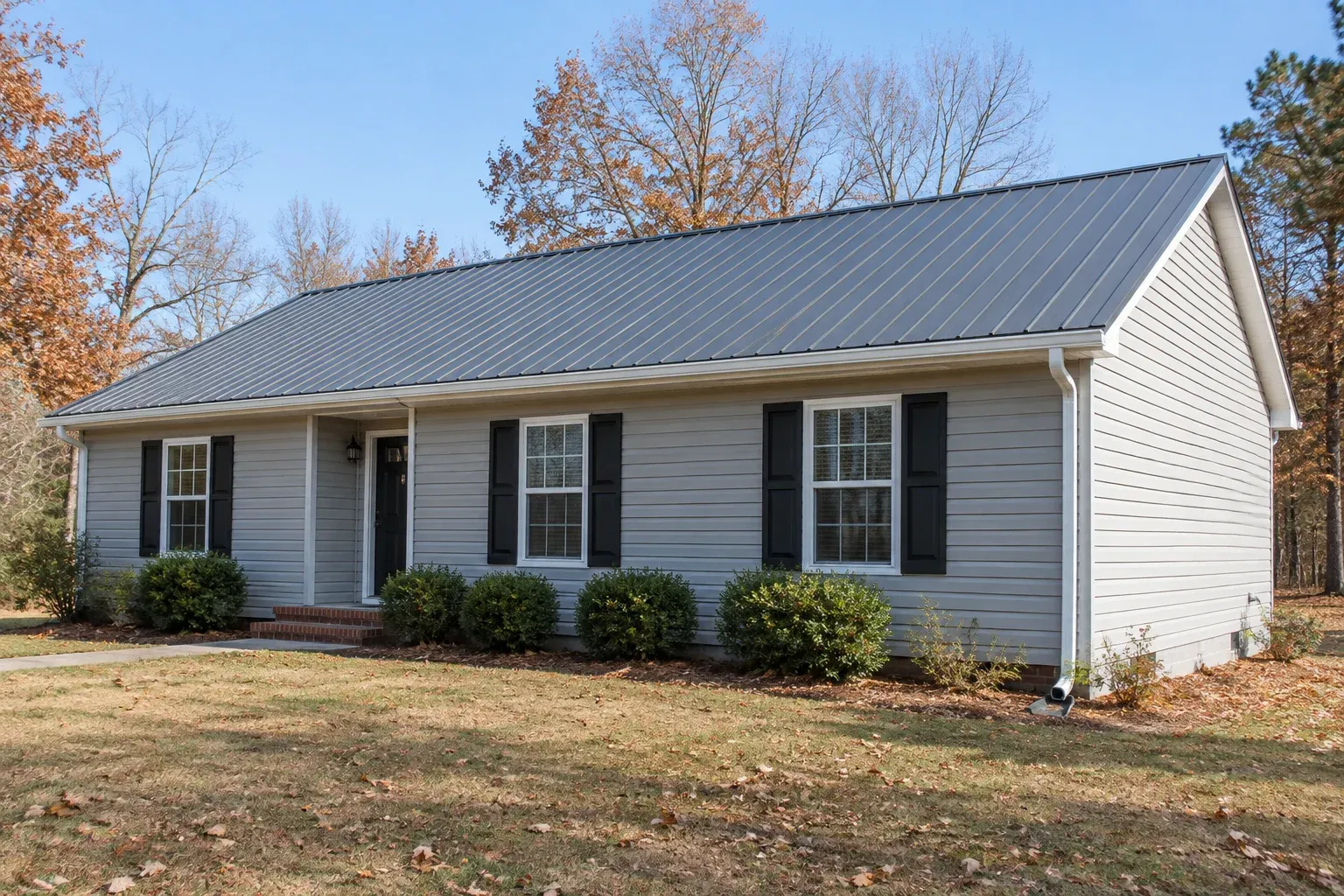
Gutter system design in Raeford, NC, raises a useful winter question for properties with metal roofing: where do ice guards fit? The answer starts by separating two jobs. Gutters collect roof runoff and route it to downspouts. Roof-mounted snow or ice retention addresses the movement of accumulated snow and ice. Coordinating those systems can help avoid conflicting decisions at the eave, but gutters should never be treated as barriers designed to stop sliding snow.
A gutter system design discussion should address drainage separately from roof-mounted snow retention, then examine how both relate to the same roof edge. This matters for homeowners and for managers of offices, shops, agricultural buildings, and rental properties. The right recommendation depends on the actual roof and the areas below it—not simply on whether the roof is metal or whether a winter storm is forecast.
What Gutters and Ice Guards Actually Do
A gutter needs to intercept water leaving the roof, carry that water along a supported channel, and deliver it through adequately planned outlets. Roof area, concentrated valley runoff, gutter slope, outlet locations, and discharge conditions all influence the layout. CertainTeed’s drainage guidance describes gutters as a means of directing roof water away from a building and emphasizes keeping them clear. That water-management role does not make a gutter a structural snow restraint.
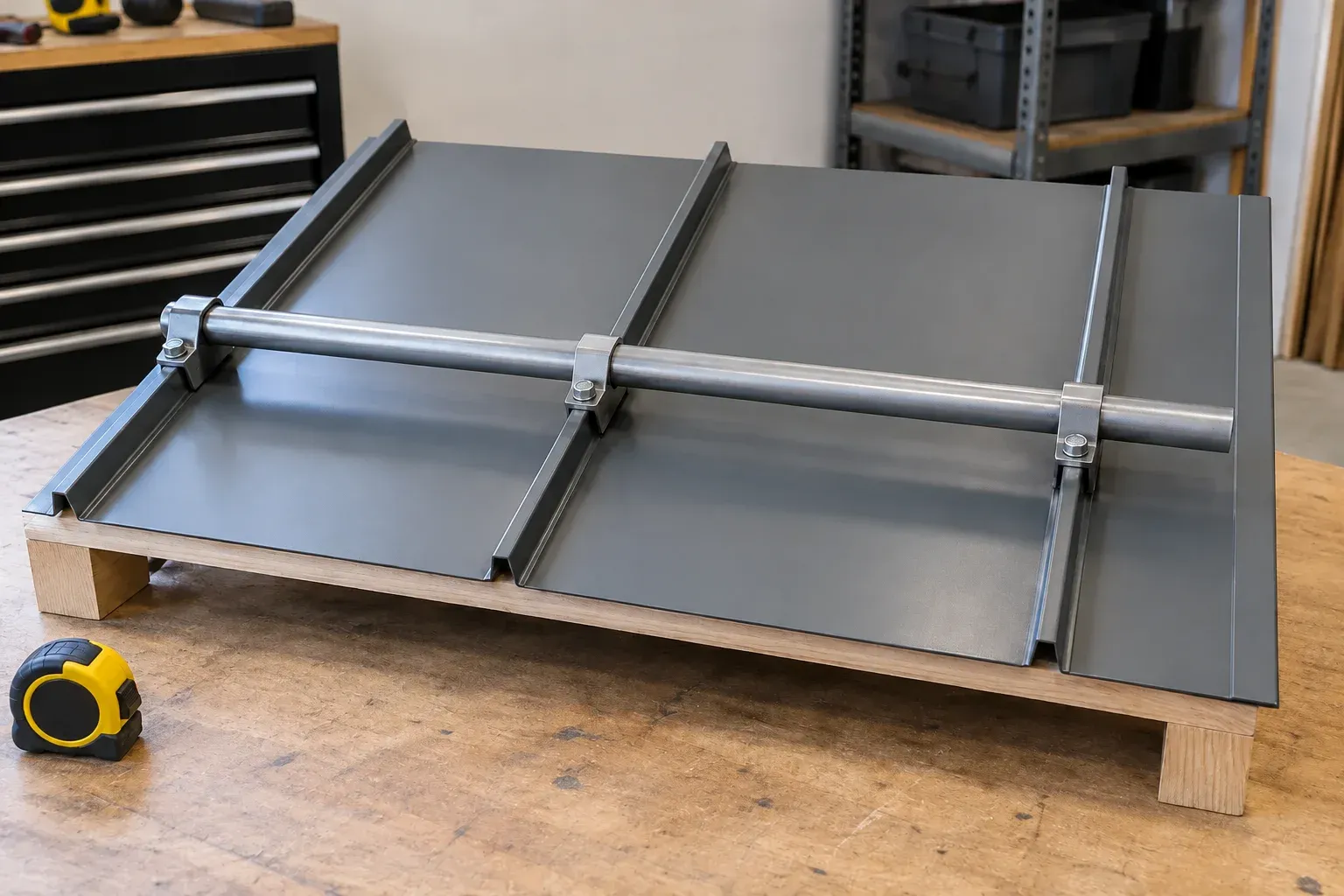
Products commonly called ice guards may instead be snow-retention devices attached to the roof. Their purpose and configuration must be checked against the product documentation. For example, GAF’s TimberSteel component catalog identifies a snow guard specifically for its TimberSteel roof system. That is a system-specific example, not proof that the same guard or attachment suits standing-seam panels, exposed-fastener roofing, or every other metal roof. Leaf guards are different again: they address debris entry, not sliding snow.
Gather Roof-Specific Information First
Before choosing accessories, identify the roofing product as precisely as possible. A smooth standing-seam panel and a textured metal shingle roof can have different profiles, attachment arrangements, and accessory requirements. Keep any roof invoices, product labels, installation documents, and warranty information available. If the manufacturer is unknown, say so rather than guessing from color or appearance. Ground-level photographs can help start the discussion without requiring anyone to climb onto the roof.
Roof slope and the length of each roof plane also matter, along with valleys, dormers, changes in elevation, and existing retention devices. A professional may need to confirm dimensions and supporting construction before recommending a layout. Describe previous events concretely: where water overshot the gutter, where an outlet froze, or whether snow released above a doorway. Those observations help distinguish drainage problems from roof-shedding concerns without assuming one accessory will solve both.
- Roof manufacturer, product name, panel or shingle profile, and available installation documents.
- Known roof slope, roof-plane dimensions, valleys, and changes in roof height.
- Existing gutter size, outlet locations, downspout routes, and visible damage.
- Entrances, walkways, parked vehicles, equipment, and lower roofs beneath the eaves.
Coordinate Gutter Placement With the Roof Edge
Gutter placement must balance water capture with the roof-edge detail. Panel overhang, drip-edge flashing, fascia condition, gutter profile, and the path of runoff should be considered together. Moving a gutter arbitrarily higher to catch fast-moving water, or lower to avoid possible snow contact, can create a different problem. There is no universal height adjustment that replaces checking the actual eave geometry and applicable roof and gutter guidance.
Concentrated runoff deserves separate attention. A valley feeding a short gutter section may place more demand on that section than a longer, evenly draining roof edge. The discussion of gutter design for roof valleys and additions explains why roof geometry matters beyond total gutter length. Outlet capacity and downspout placement should be evaluated with the collection channel; selecting a larger gutter alone does not correct an undersized outlet or an unsuitable discharge route.
Keep Retention Recommendations Conditional
If retention is being considered, request guidance for the specific roofing and retention products before settling on attachment type, quantity, or placement. Seam clamps, mechanically fastened devices, and adhesive-mounted products are not interchangeable. Compatibility may depend on seam shape, metal thickness, coating, supporting construction, and the product’s tested limitations. A roof-mounted system also introduces forces into the roof assembly, so its layout should not be reduced to placing a few guards wherever they look convenient.
The gutter layout and any retention proposal should therefore be compared before work proceeds. Relevant questions include whether the roof-edge detail remains intact, how meltwater reaches the gutter, and whether roof modifications affect manufacturer requirements. The article on metal roof ice guard attachment options provides another useful planning topic. Where loading or attachment questions exceed product instructions, obtain qualified roofing or engineering input rather than improvising a pattern or assuming existing gutters can carry the additional forces.
Consider Entrances, Work Areas, and Discharge
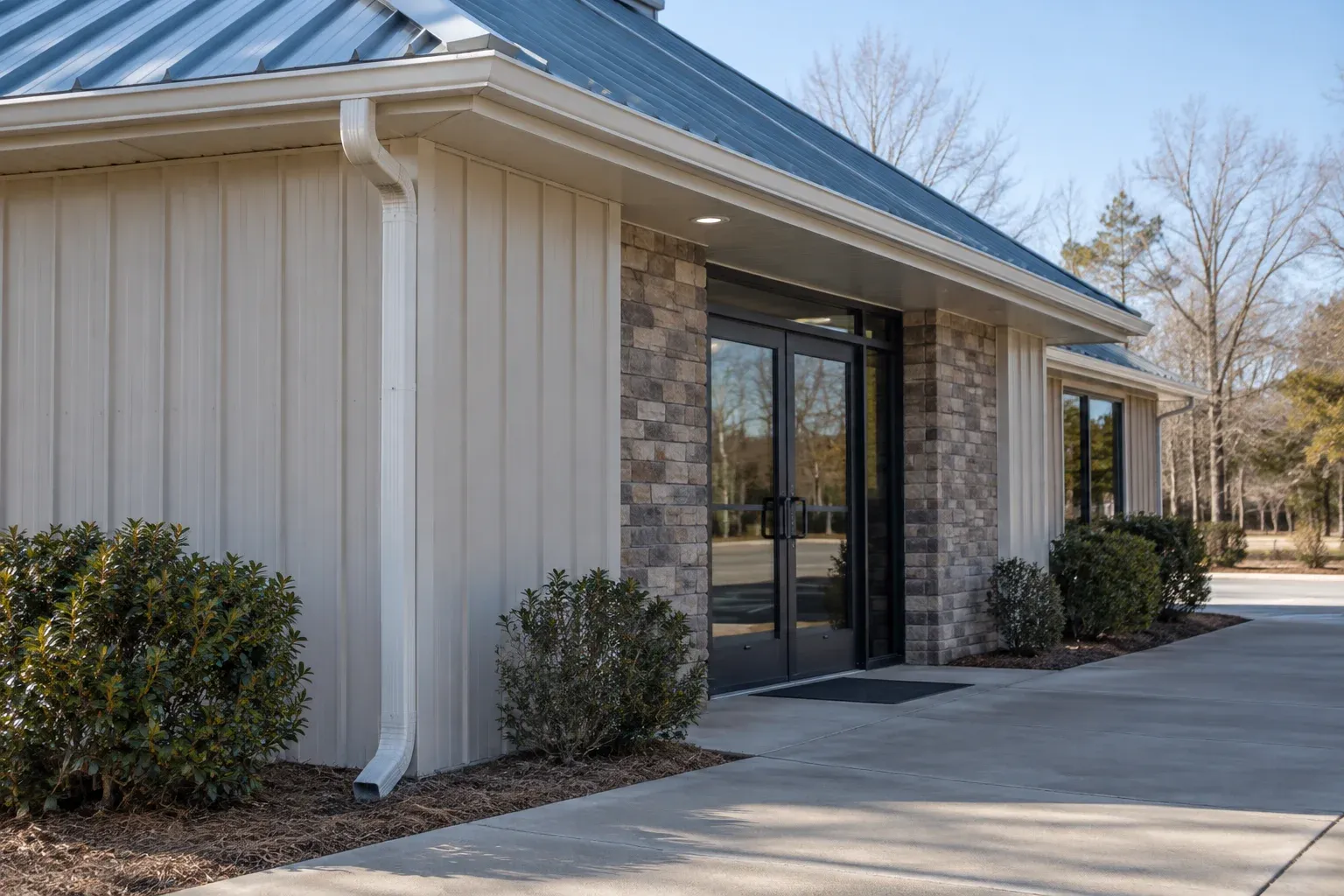
The space below the eave helps establish priorities. At a home, that may be a front step, garage approach, or patio. At a medical office or retail property, it may be a frequently used entrance. Agricultural and light-industrial properties may have loading areas or equipment beneath the roof edge. These uses do not automatically require retention, but they should be identified when evaluating the consequences of snow or ice release.
Drainage discharge deserves equal attention. Water directed onto a walking surface can become a winter hazard when temperatures fall. The National Weather Service’s winter preparedness guidance describes freezing rain and the dangers of icy surfaces in North Carolina. Plan discharge around pedestrian routes, grading, and drainage conditions rather than merely choosing the shortest downspout route. During hazardous weather, restrict access to affected areas instead of attempting roof or gutter adjustments.
Plan Ahead and Inspect Safely
Before winter, look from the ground for gutter sagging, separated joints, loose downspouts, and obvious debris at outlets. After a storm, document new distortion or changed alignment from a safe location. Do not stand beneath hanging ice, climb an icy ladder, or pull accumulated material from the roof edge. A gutter that has shifted may need its attachment and supporting fascia assessed, not simply bent back into place.
For gutter system design in Raeford, NC, the practical goal is a coordinated plan: collect water effectively, discharge it appropriately, and assess roof-mounted retention only where roof characteristics and manufacturer guidance support it. Keep the drainage decision and the snow-retention decision distinct, while sharing the same roof information. That approach gives property owners a clearer basis for asking questions without assuming every metal roof needs ice guards.
Frequently asked questions
Does every metal roof in Raeford need ice guards?
No. The decision depends on the roof profile, slope, roof-plane dimensions, expected loading, manufacturer guidance, and what lies below the eaves. A roof-specific assessment is more useful than a blanket recommendation based only on the roofing material.
Can larger gutters stop snow from sliding off a metal roof?
No. Gutters collect water and direct it toward downspouts; they are not snow-retention devices. A larger gutter may provide more drainage capacity when properly designed, but it does not replace a compatible roof-mounted retention system where one is warranted.
What should I bring to a gutter design discussion?
Bring available roof product information, installation records, ground-level photographs, descriptions of past overflow or winter damage, and the locations of entrances and discharge points. Roof slope, dimensions, attachment conditions, and retention compatibility should be confirmed by qualified professionals rather than measured from an unsafe position.